You know that friend who’s obsessed with caving? The one who disappears underground every weekend, comes back covered in mud, and can’t stop talking about some amazing crystal formation they saw 200 meters below the surface? Maybe you think they’re slightly unhinged. Maybe you’re curious what the appeal actually is.
Here’s the truth: caving isn’t for everyone. But for those who love it, it becomes something close to an addiction. And once you understand why, it starts to make sense—even if you never develop the obsession yourself.
Let me walk you through what actually draws people to spend their leisure time crawling through dark, wet, muddy holes in the ground.
The Attraction of Genuine Discovery
In 2026, there aren’t many places left on Earth that humans haven’t thoroughly explored, photographed, mapped, and turned into Instagram backgrounds. You can use Google Street View to “visit” remote villages in Nepal. Satellites have photographed every square meter of the planet’s surface. The sense of discovering something genuinely unknown has largely disappeared from everyday life.
Except in caves.
Here’s what makes caves different: new caves are discovered constantly, and even well-known cave systems have unexplored passages. When you’re caving—really caving, not taking a tourist tour—there’s a genuine possibility that you’re the first human ever to see what you’re looking at.
That limestone formation? You might be the first person to shine a light on it. That narrow passage? Maybe nobody’s ever squeezed through it before. That underground chamber? You could be the first to stand there since it formed millions of years ago.
This isn’t theoretical. In New Zealand alone, cavers regularly discover new caves or new passages in known systems. The Nettlebed Cave system near Nelson was only discovered in 1959 and continues to be explored and mapped today. In 2020, cavers extended the known passages of the Bulmer Cavern system, adding kilometers of previously unexplored territory.
For people drawn to exploration and discovery, this is intoxicating. You’re not playing at being an explorer—you’re actually doing it.
The Physical Challenge That Actually Feels Meaningful
Modern gyms are full of people running on treadmills going nowhere, lifting weights that serve no practical purpose, and doing exercises designed to simulate work without actually accomplishing anything. There’s nothing wrong with this—it’s effective exercise—but it’s fundamentally artificial.
Caving offers physical challenges that feel real because they are real. You’re not climbing a wall in a gym; you’re climbing an actual rock face because that’s the only way forward. You’re not doing core exercises; you’re using your core strength to squeeze through a passage that’s barely wide enough for your body. Every physical effort has an immediate, tangible purpose.
The challenges vary enormously depending on the cave and route:
- Tight Squeezes: Some passages require you to exhale fully and wriggle through spaces barely wider than your body. It’s claustrophobic, uncomfortable, and utterly absorbing—you can’t think about anything except the immediate problem of getting through.
- Vertical Climbing and Abseiling: Many cave systems require climbing up or down vertical or near-vertical sections. Unlike gym climbing with safety mats below, cave climbing carries real stakes—though proper safety equipment keeps actual risk minimal.
- Endurance Challenges: A serious caving expedition might involve 6-8 hours of constant physical activity—crawling, climbing, squeezing, wading through water, and scrambling over boulders. It’s exhausting in a way that feels earned.
- Problem-Solving Under Physical Stress: You might need to figure out how to get yourself and your equipment through a challenging section while you’re already tired, wet, and cold. This combination of physical and mental challenge is deeply satisfying for people who like that sort of thing.
The physical demands of caving attract people who want exercise that feels like adventure rather than just fitness maintenance.
The Absolute Darkness
Most people encounter true darkness rarely, if ever. In cities, there’s always light pollution. Even in rural areas, moonlight and starlight prevent complete darkness. Your eyes never fully lose the ability to see.
In caves, when you turn off your light, you experience absolute darkness—the complete absence of light. You literally cannot see your hand in front of your face. This isn’t metaphorical; it’s actual sensory deprivation.
For some people, this is terrifying. For others, it’s fascinating.
Here’s what happens in absolute darkness: your other senses sharpen dramatically. You become intensely aware of sounds—water dripping, your breathing, the movements of people around you, the echo of voices off rock walls. Your sense of touch becomes more acute. Your spatial awareness shifts as your brain tries to construct a mental map without visual input.
Experiencing absolute darkness makes you realize how dependent you normally are on vision and how capable your other senses actually are. It’s disorienting and grounding at the same time.
Plus, there’s something profound about experiencing darkness that’s millions of years old—darkness that has existed since the cave formed, interrupted only briefly when cavers pass through with lights.
The Underground Beauty Nobody Expects
When people think of caves, they usually imagine brown rock, mud, and not much else. What they don’t expect is the sheer beauty of underground formations.
Caves contain some of the most extraordinary natural sculptures on Earth:
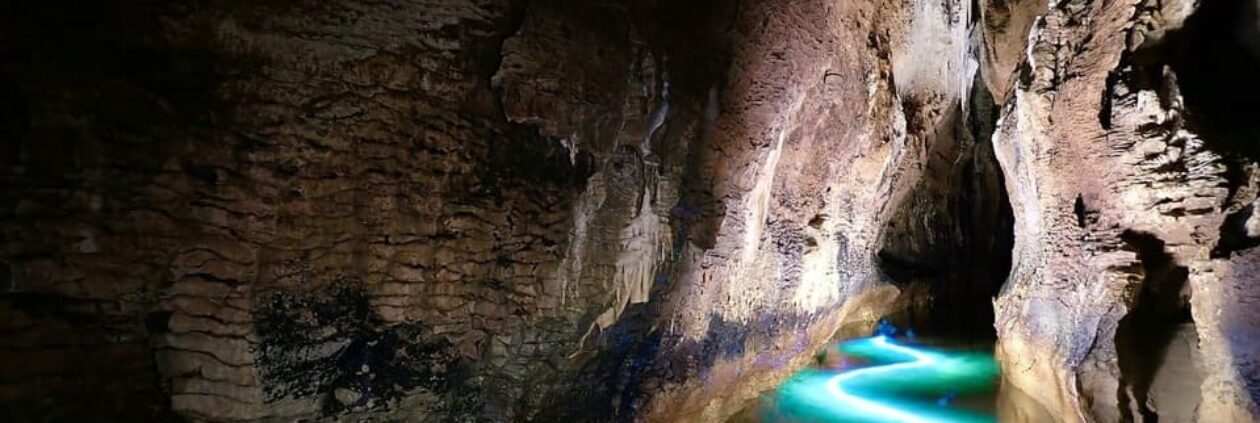
- Stalactites and Stalagmites: These form over thousands of years as mineral-rich water drips from cave ceilings. The result is delicate spikes and columns that look almost deliberately crafted.
- Flowstone: When mineral-laden water flows over cave surfaces, it leaves behind deposits that create flowing, frozen-waterfall effects in stone. The patterns can be breathtaking.
- Helictites: These are formations that defy gravity, growing in curved or spiral patterns due to capillary forces. They look almost alien.
- Crystal Formations: Some caves contain crystalline formations—gypsum flowers, aragonite crystals, calcite crystals—that sparkle in your headlamp like the cave is full of diamonds.
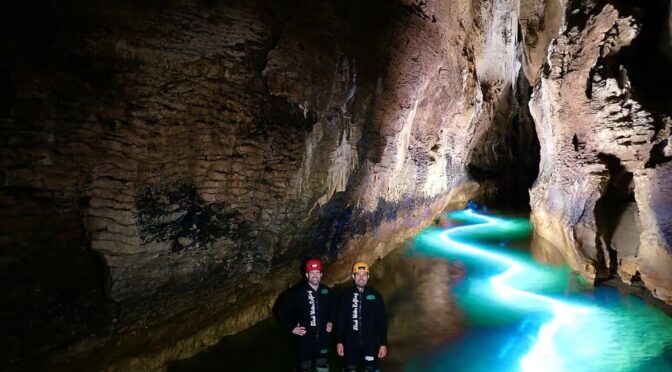
- Underground Waterfalls and Rivers: The sound and sight of water flowing through a cave system creates an atmosphere unlike anything above ground.
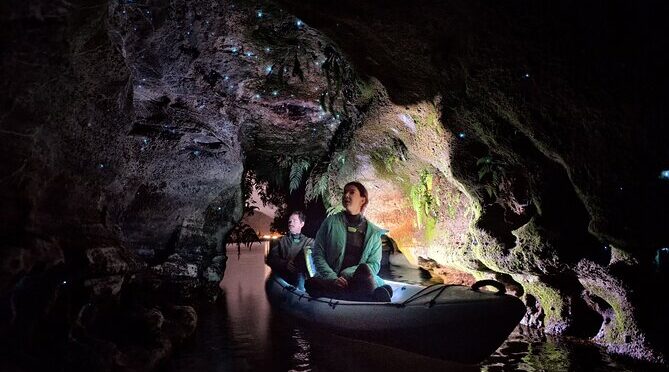
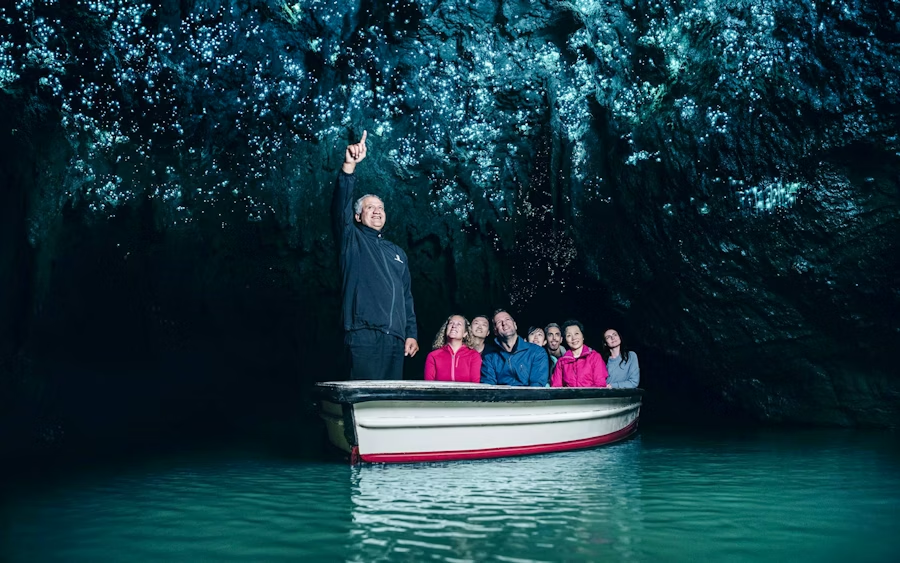
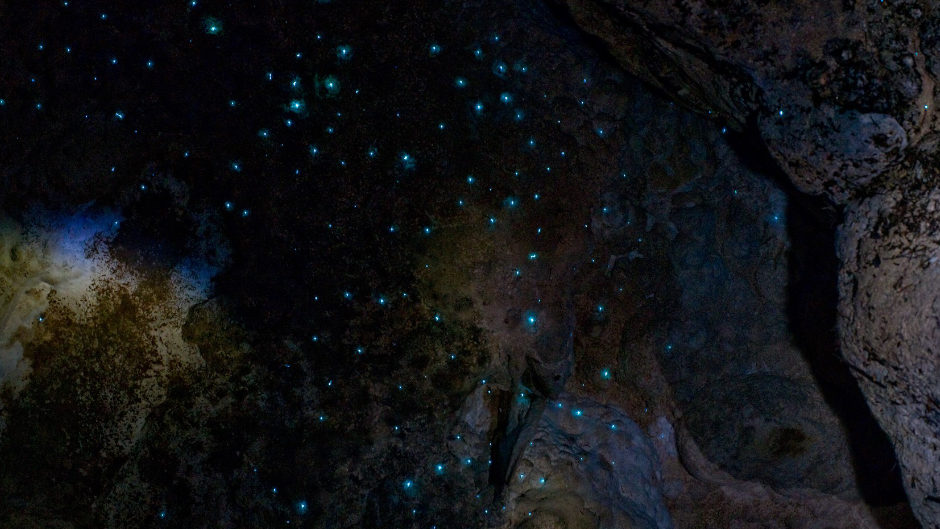
- Glowworms: In New Zealand caves, thousands of bioluminescent glowworm larvae create the illusion of a starry sky on cave ceilings.
The Luckie Strike cave system in Waitomo, for example, is known for its “unending crystal formations”—passage after passage of sparkling formations that look like something from a fantasy film. And you only see this beauty if you’re willing to get wet, muddy, and exhausted reaching it.
For people drawn to natural beauty, caves offer something almost nobody else sees. These formations exist in complete darkness, unseen except when cavers pass through. There’s something special about beauty that exists for its own sake, not for observers.
The Mental Reset of Complete Immersion
One of the less obvious appeals of caving is that it’s impossible to be distracted while doing it. You can’t check your phone (no signal underground, and it would get destroyed anyway). You can’t think about work deadlines or relationship problems or anything else from your surface life.
When you’re squeezing through a tight passage or climbing a difficult section, your entire mental focus narrows to the immediate physical challenge. There’s no room for anxiety about the future or regret about the past—just the present moment and the immediate problem of navigation.
This forced mindfulness is therapeutic for many people. Our modern lives involve constant distraction, multitasking, and mental noise. Caving offers rare complete immersion in a single activity.
Cavers often describe this as one of the most appealing aspects of the activity. When you emerge from a 6-hour cave expedition, your brain feels reset in a way that’s hard to achieve through other activities.
The Community and Shared Experience
Caving creates bonds between people faster than almost any other activity. When you’ve spent hours underground together, navigating challenges, helping each other through difficult sections, and sharing the experience of discovery, you develop real connections.
The caving community worldwide tends to be welcoming, passionate, and willing to share knowledge. Experienced cavers are usually happy to teach beginners, not because there’s money in it (there usually isn’t), but because they want to share something they love.
In New Zealand, organizations like the New Zealand Speleological Society bring together cavers of all experience levels. There are regular expeditions, conservation efforts, and social events. For people who enjoy this kind of community—passionate, knowledge-sharing, adventure-focused—the caving community is deeply appealing.
Plus, caving stories are genuinely interesting. “I spent Saturday morning at the gym” doesn’t make for compelling conversation. “I discovered a new passage in a cave system that hadn’t been explored before” absolutely does.
The Learning Curve That Never Ends
Caving involves an enormous range of skills, and there’s always more to learn:
- Technical Skills: Rope work, abseiling, climbing techniques, using specialized equipment (ascenders, descenders, cow’s tails), navigation, and cave rescue procedures.
- Scientific Knowledge: Geology (how caves form, different rock types, erosion patterns), biology (cave-adapted creatures, ecosystems), hydrology (how water moves through cave systems), and conservation (protecting fragile cave environments).
- Practical Skills: Route finding, risk assessment, emergency response, first aid in confined spaces, equipment maintenance, and photography in challenging conditions.
This appeals particularly to people who get bored once they’ve mastered something. In caving, mastery is essentially impossible—there’s always a more challenging cave, a new technique to learn, or a deeper understanding to develop.
The Acceptable Excuse to Be Completely Childish
Let’s be honest: part of caving’s appeal is that it gives adults permission to play in mud, crawl through tunnels, and get completely filthy in ways that would be socially unacceptable in normal life.
There’s something deeply satisfying about returning to that childhood state where getting dirty isn’t something to avoid—it’s evidence of adventure. When you emerge from a cave covered head to toe in mud, exhausted and grinning, you look ridiculous. And that’s part of the fun.
Modern adult life involves so much concern with appearances, cleanliness, and maintaining dignity. Caving is a socially acceptable way to completely abandon all of that. Nobody looks dignified while squeezing through a muddy passage on their belly. Everyone looks equally ridiculous, and that shared ridiculousness is part of the bonding experience.
The Genuine Risk (Carefully Managed)
This might sound counterintuitive, but part of caving’s appeal is that it involves real risk—not manufactured, sanitized, insurance-company-approved “adventure,” but actual potential danger.
Caves are objectively hazardous environments. Flooding can occur with little warning. Navigation errors can lead to getting lost. Equipment failure can strand you. Rockfall, hypothermia, injury in remote locations—these are all real possibilities.
However—and this is crucial—modern caving with proper training, equipment, and procedures reduces these risks to manageable levels. The risk isn’t eliminated, but it’s controlled through knowledge, preparation, and good decision-making.
For many people, this element of genuine (but managed) risk is deeply appealing. It makes you take the activity seriously. It requires you to develop real skills and make thoughtful decisions. And it creates a sense of accomplishment that comes from successfully navigating actual danger, not simulated danger.
This isn’t about being reckless—it’s about engaging with the natural world on terms that include real consequences, which makes the experience feel authentic in ways that many modern adventures don’t.
The Escape from the Modern World
Finally, and perhaps most importantly, caving offers complete escape from the modern world in a way few other activities can match.
When you’re underground, you’re not just away from your phone and email—you’re in an environment that’s fundamentally pre-human. Caves existed millions of years before humans evolved. They’ll exist millions of years after we’re gone. Being in them provides perspective on human concerns that’s hard to achieve any other way.
There’s no advertising underground. No news cycle. No social media. No traffic. No crowds (unless you’re on a tourist tour). Just rock, water, darkness, and time measured in geological rather than human scales.
For people who find modern life overwhelming, exhausting, or alienating, caves offer an escape that’s both literal and metaphorical. You’re physically removed from everything above ground, and psychologically removed from everything that usually occupies your mind.
So Why Do People Fall in Love with Caving?
The answer is different for everyone, but it usually involves some combination of:
- The thrill of genuine discovery and exploration
- Physical challenges that feel meaningful and real
- Natural beauty that few people ever see
- The mental clarity that comes from complete immersion
- A welcoming community of like-minded adventurers
- Continuous learning and skill development
- Permission to be muddy, childish, and undignified
- Accessibility across experience levels
- The satisfaction of managing real risk successfully
- Complete escape from modern life
Not everyone will understand the appeal. When you tell people you spent your weekend crawling through underground passages, getting wet and muddy and exhausted, they might think you’re crazy.
But for those who’ve experienced it, caving offers something increasingly rare: genuine adventure, real discovery, and the sense of doing something that feels fundamentally meaningful even though it serves no practical purpose.
And once you’ve felt that—once you’ve squeezed through a tight passage into a chamber no human has seen before, or floated beneath thousands of glowworms in absolute silence, or emerged exhausted into daylight after hours underground—you understand why people fall in love with it.
It’s not despite the mud, the cold, the exhaustion, and the difficulty. It’s because of them.