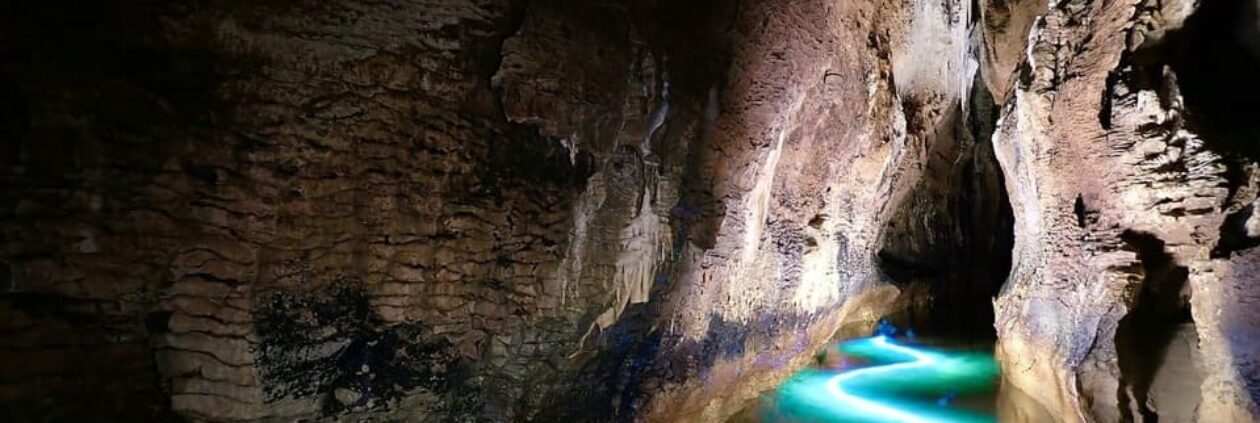
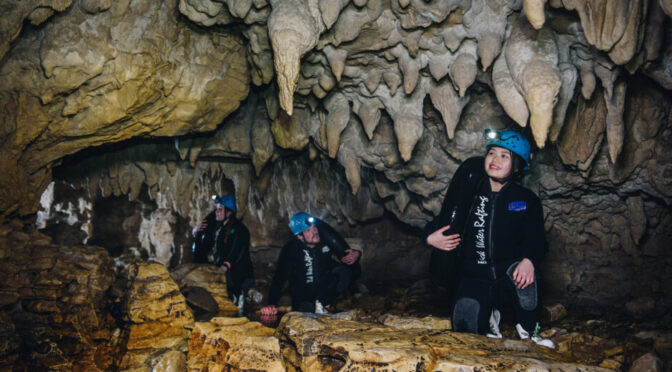
You’ve probably seen the photos: people in wetsuits and helmets, floating through dark caves on inner tubes, headlamps illuminating glowworms on the cave ceiling above. It looks equal parts terrifying and amazing. That’s black water rafting, and it’s one of New Zealand’s most unique adventure experiences.
But what is it actually like? Not the Instagram version—the real version where you’re cold, wet, and wondering whether jumping off that waterfall is really a good idea. Let me walk you through exactly what to expect, because black water rafting is brilliant, but it’s definitely not for everyone.
What Black Water Rafting Actually Is
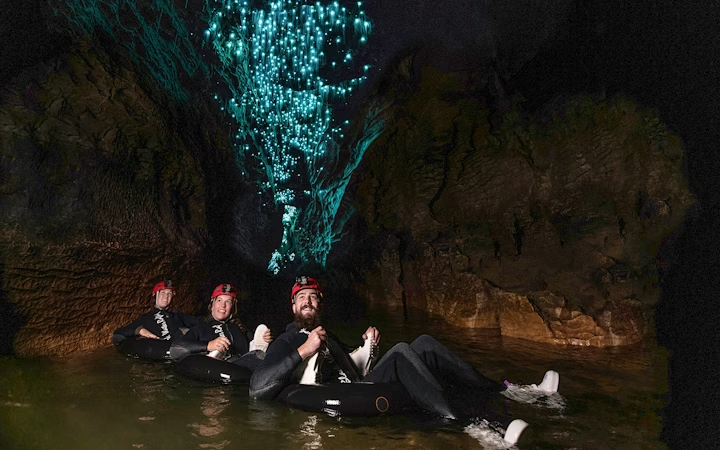
First, let’s clear up some confusion. Despite the name, black water rafting has nothing to do with white water rafting. You’re not navigating rapids in an inflatable boat. Instead, you’re floating through underground cave systems on an inner tube—the kind you’d use at a swimming pool, except industrial-strength and attached to you via your wetsuit.
The “black water” refers to the darkness of the underground streams you’re floating through. While white water rafting happens in daylight on surface rivers, black water rafting happens in complete darkness underground, with only your headlamp for light.
The experience was invented in Waitomo, New Zealand, in the 1980s when local adventure guides figured out that floating through the region’s cave systems would be an incredible way to see the famous glowworms. Turns out they were right—it’s now one of the most popular adventure activities in the country.
Where Black Water Rafting Happens
Black water rafting is almost entirely centered in the Waitomo region of New Zealand’s North Island. Waitomo is about 2.5 hours south of Auckland, in farming country that’s riddled with limestone caves. The region has over 300 known caves, many featuring underground rivers and streams perfect for this kind of adventure.
While there are caves throughout New Zealand, Waitomo has the infrastructure, the experienced operators, and—crucially—the glowworms that make black water rafting special. You’ll occasionally find similar experiences offered in other parts of the country, but Waitomo is the epicenter and where you’ll find the most developed operations.
The main operators are The Legendary Black Water Rafting Company (yes, that’s actually what they’re called) and Waitomo Adventures. Both have been running tours for decades and know exactly what they’re doing.
The Different Types of Black Water Rafting Tours
Not all black water rafting experiences are created equal. There are several different tour options, ranging from relatively gentle floating to serious adventure expeditions. Here’s what’s actually available:
Black Labyrinth (3 hours, beginner-friendly)
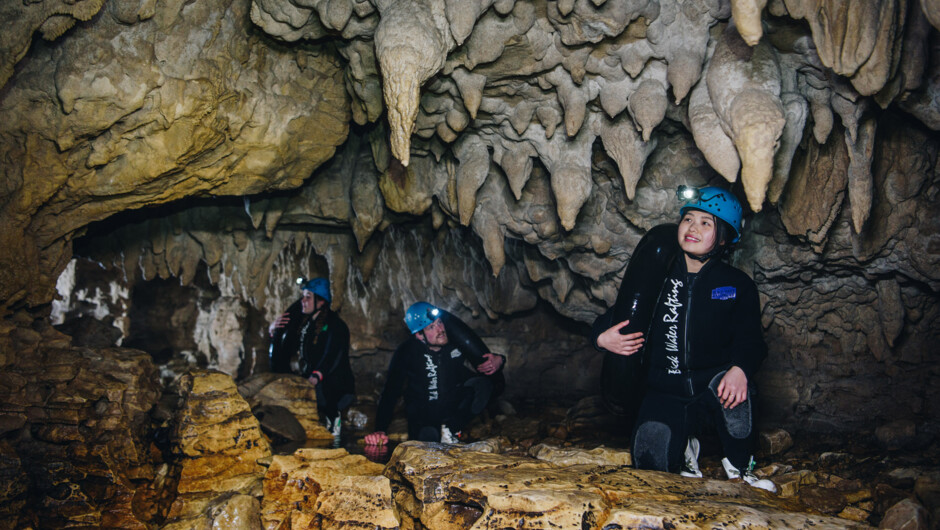
This is the classic black water rafting experience and the most popular option. You’ll be underground for about 3 hours, floating through the Ruakuri Cave system. The tour includes:
- Floating on inner tubes through underground passages
- Jumping off a small waterfall into deep water (optional but encouraged)
- Seeing thousands of glowworms on the cave ceiling
- Scrambling over some rocks and through tight passages
- Finishing with a hot shower and soup
Physical difficulty: Moderate. You need reasonable fitness but don’t need to be an athlete. The waterfall jump is only about 3 meters, and if you’re genuinely too scared, you can climb down instead.
Black Abyss (5 hours, more adventurous)
This is the step up for people who want more challenge. Everything from Black Labyrinth, plus:
- A 35-meter abseil into the cave entrance
- A flying fox zip-line through an underground cavern
- More time in the water
- More challenging climbs and scrambles
Physical difficulty: High. The abseil alone rules this out for people afraid of heights or without reasonable upper body strength. You’ll be tired by the end.
Black Odyssey (7 hours, serious adventure)
This is for people who want a genuine expedition. You’ll explore deeper into the cave system, spend more time underground, and face more challenging obstacles. This isn’t a tourist activity—it’s actual adventure caving with the added element of tube floating.
Waitomo Adventures Options
Waitomo Adventures (a different company) offers similar experiences but with different routes through different cave systems. Their signature tour is the “Lost World” experience, which starts with a 100-meter abseil into a massive cave opening. It’s spectacular but definitely not for beginners.
What Actually Happens on a Black Water Rafting Tour
Let me walk you through a typical Black Labyrinth experience, because this is what most people do and it’ll give you a realistic sense of what to expect.
9:00 AM – Arrival and Check-In:
You arrive at the Legendary Black Water Rafting Company headquarters in Waitomo village. You’ll fill out paperwork (waiver forms, medical declarations—standard adventure tourism stuff) and meet your guide and group.
Group sizes typically range from 8-15 people. Your group will include a mix of ages and nationalities, though everyone must be at least 12 years old (16 for the more intense tours).
9:30 AM – Getting Equipped:
This is where reality hits. You’ll be given:
- A thick wetsuit (usually 7mm, sometimes with a wetsuit jacket over it)
- Wetsuit boots
- A helmet with a headlamp
- An inner tube
- A harness (used for safety in certain sections)
Getting into a wetsuit is never dignified. You’ll struggle, hop around, and probably need help from the staff. The wetsuit will feel tight—that’s normal. If you can barely breathe, it’s too tight and you need a bigger size.
10:00 AM – The Brief:
Your guide explains how the tour works, what to expect, and—most importantly—safety procedures. Pay attention to this part. They’ll teach you how to hold your tube, how to navigate the cave, and what to do if you get stuck or separated from the group.
They’ll also tell you about the waterfall jump. The guide will demonstrate, explain the technique (arms crossed, legs together, don’t lean back), and make it clear that while it’s optional, pretty much everyone does it and it’s completely safe.
10:30 AM – Entering the Cave:
You’ll walk (or sometimes drive) to the cave entrance, carrying your tube. The entrance to Ruakuri Cave is through a spectacular spiral walkway that descends into the earth—it’s wheelchair accessible and genuinely beautiful.
Once you’re in the cave proper, things change quickly. The temperature drops to around 10-12°C (50-54°F). It’s dark. The sound of underground water is everywhere. This is when some people start questioning their life choices.
11:00 AM – In the Water:
Your guide will lead you to the first water section. Getting into the water on your tube is awkward at first. You sit in the inner tube with your butt in the hole, leaning back, with your arms and legs controlling direction.
The water is cold. Even with a wetsuit, it’s cold. Not unbearable, but definitely cold. Within a few minutes, your wetsuit traps a layer of water against your skin, your body heat warms it, and you stop noticing the temperature as much.
Floating through the dark passages is surreal. You use your hands and feet to push off walls and rocks, controlling your speed and direction. Sometimes the water is shallow enough to touch the bottom; other times you’re floating in deep pools.
11:30 AM – The Glowworms:
This is the moment everyone’s been waiting for. Your guide will tell you to turn off your headlamps. Complete darkness. Then, as your eyes adjust, you see them—thousands upon thousands of tiny blue-green lights covering the cave ceiling.
Glowworms aren’t actually worms; they’re the larvae of a fungus gnat. They create sticky threads that hang down to catch prey, and the bioluminescent light attracts insects to the threads. The effect is like floating under a starry sky, except you’re deep underground in a cave.
You’ll float through these glowworm sections in silence (talking disturbs the glowworms), just staring up at the ceiling. It’s magical, and it’s the reason people do this.
12:00 PM – The Waterfall Jump:
Eventually, you reach the waterfall. It’s about 3 meters high (roughly 10 feet), dropping into a deep pool. The guide goes first to demonstrate, then everyone takes turns.
Here’s what jumping is actually like: You climb up to the jumping point, still in your tube and wetsuit. Your guide positions you. You cross your arms over your chest, keep your legs together, and jump.
The fall lasts about a second. You hit the water, go under briefly (the tube keeps you buoyant), and pop back up. The whole thing is over before you have time to really be scared. Everyone screams or shouts as they jump—it’s part of the experience.
Is it scary? A little. Is it dangerous? No—people have been doing this jump thousands of times without incident. The pool is deep, the guide has tested it, and you’re in a thick wetsuit that provides flotation.
If you absolutely cannot bring yourself to jump, you can climb down a waterfall route instead. But honestly, almost everyone jumps, including people who thought they wouldn’t.
12:30 PM – More Cave Exploration:
After the jump, you continue through the cave system. Some sections you’re floating, other sections you’re scrambling over rocks or crawling through tight passages. The tube becomes something you carry, drag, or sit on depending on the terrain.
The guide will point out interesting geological formations—stalactites, stalagmites, flowstone, limestone columns. If you’re interested, they’ll explain how the cave formed over millions of years. If you’re not, they’ll keep things moving.
1:00 PM – Exiting the Cave:
Eventually, you see daylight ahead. You exit through a different cave opening than you entered, emerging into forest or farmland. You’re wet, muddy, tired, and probably grinning.
1:30 PM – Hot Showers and Food:
Back at the base, you’ll shower (the facilities are basic but functional), change into dry clothes, and be served hot soup and bagels. This might be the best soup you’ve ever eaten, purely because you’re cold and hungry.
The whole experience, start to finish, takes about 5 hours including prep and debrief.
Who Should (and Shouldn’t) Do This
Black water rafting is great if you:
- Want an adventure that’s unique to New Zealand
- Are comfortable getting wet and cold
- Have reasonable fitness (you don’t need to be athletic, just functional)
- Are okay with dark, enclosed spaces
- Want to see glowworms in a completely different way than standard cave tours
- Are traveling with friends and want a shared challenge
Skip it if you:
- Are claustrophobic
- Cannot swim (this is a hard requirement—you must be able to swim)
- Have mobility issues that would make climbing, scrambling, and squeezing through tight spaces difficult
- Are pregnant or have serious health conditions
- Are terrified of the dark
- Just want to see glowworms (do a standard dry cave tour instead)
Age requirements vary by tour: typically 12+ for Black Labyrinth, 16+ for more adventurous options. There’s no official upper age limit, but you need to be honest about your fitness level.
Practical Information You Need to Know
Cost: Expect to pay around $150-200 NZD for Black Labyrinth, $250-300 NZD for Black Abyss, and more for longer expeditions. Yes, it’s expensive. But it includes all equipment, guides, insurance, and post-tour food.
What to Bring: Just swimwear to wear under the wetsuit, a towel, and a complete change of clothes. Many people also bring a waterproof camera, though be warned—you’ll be focused on not drowning, so getting good photos is challenging.
What Not to Bring: Jewelry, watches, anything valuable. Leave it at your accommodation. The cave will eat it.
Booking: Book in advance, especially during New Zealand’s summer (December-February). Tours run year-round, but some have limited availability in winter.
Fitness Requirements: You need to be able to swim 50 meters and tread water for 3 minutes. You’ll be asked to demonstrate this if there’s any doubt. They’re not being difficult—it’s a genuine safety requirement.
Physical Restrictions: Maximum weight limits exist (usually around 120kg/265lbs) due to equipment constraints. Certain medical conditions (heart problems, seizures, pregnancy) exclude you from participating.
Is Black Water Rafting Worth It?
Here’s my honest take after doing multiple black water rafting tours over the years:
It’s worth it if you want a genuinely unique experience that you literally cannot do anywhere else in the world. The combination of cave exploration, glowworms, and underground tubing exists nowhere but Waitomo.
It’s worth it if you’re the kind of person who prefers doing things over just seeing things. This is participatory adventure, not passive observation.
It might not be worth it if you just want to see glowworms and don’t care about the adventure aspect. A standard cave tour shows you glowworms for a quarter of the price and a fraction of the physical challenge.
It’s definitely not worth it if you’re going to be miserable because you hate being cold, wet, or in dark enclosed spaces. There’s no shame in admitting this isn’t for you and choosing a different experience.
Final Thoughts
Black water rafting is objectively ridiculous. You’re paying money to be cold, wet, and slightly scared while floating through dark caves on an inner tube. When you describe it to friends later, they’ll look at you like you’re crazy.
But that’s kind of the point. In our comfortable, climate-controlled, risk-averse modern world, there’s something deeply satisfying about doing something that’s uncomfortable and challenging for no practical reason except that it’s an adventure.
You’ll remember black water rafting long after you’ve forgotten which beach you visited or which restaurant you ate at. The cold water, the darkness, the moment you jumped off that waterfall, floating under thousands of glowworms—those memories stick.
So yes, you’ll be cold. Yes, you’ll question your decisions at least once during the experience. And yes, you’ll probably look ridiculous in your wetsuit.
But you’ll also have an adventure that’s genuinely unique to New Zealand, that challenges you just enough to feel accomplished, and that gives you a story worth telling.
Just remember to bring a towel.